
Ship guides

Cruise ship overviews for practical Pacific planning

Shipjou Rneyhub is an independent English-language New Zealand cruise ship guide and onboard lifestyle review site. Our ship overviews help you compare modern cruise experiences through staterooms, dining, amenities, entertainment, casinos and gaming context, deck plans, and seasonal Pacific itineraries. They are planning tools, not cruise-line marketing, booking advice, or a promise about what will be operating on a particular sailing.

A profile is more than a list of venues. The useful fit can differ for a quiet couple, a family managing cabin logistics, a late-night entertainment fan, or someone who wants as much outdoor deck time as possible. Use this hub to frame the right questions, then follow the detailed guides as the collection grows.

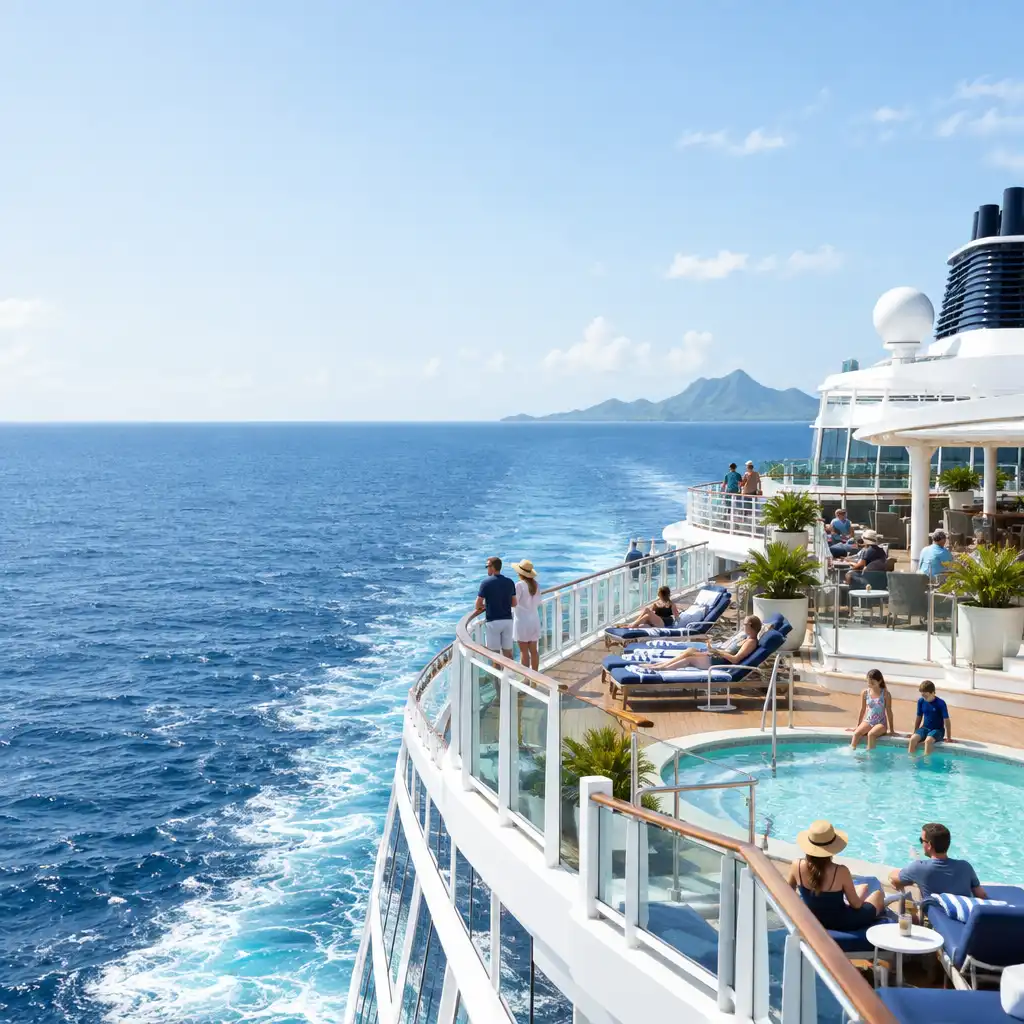
Travellers relaxing on the open deck of a contemporary cruise ship with the Pacific horizon beyond
Illustrative onboard and Pacific travel photography; not an official ship image.

Editorial method

What every ship profile examines

Each full profile is designed to connect published ship information with the everyday decisions that shape a voyage. We separate factual reference points from editorial observations, and we flag the details worth checking again for your own sailing.

  1. 01

    Sleep and daily flow

    Profiles consider stateroom categories, practical layout questions, accessibility details to investigate, and how cabin location can influence a daily routine. Published cabin information is kept distinct from editorial notes about circulation, lift proximity, deck access, or possible exposure to busy areas. Confirm current accessible-room availability, cabin assignment details, and your own access needs with the cruise operator or booking provider.

  2. 02

    Food, drink and downtime

    We look beyond a venue list to consider included and possible additional-cost dining, lounge atmosphere, outdoor and pool areas, documented activity spaces, and the rhythm of sea days. Restaurant concepts, opening hours, reservations, and charges can vary by sailing, so a list is not a quality verdict. Explore Dining & Lounges for deeper context.

  3. 03

    Evenings, entertainment and gaming

    Profiles consider entertainment style, late-night social spaces, and casino or gaming information where relevant. Observations describe atmosphere and practical context; they never promise a particular outcome or operating pattern. Availability can change between sailings.

    18+ context: Casino gaming involves financial risk; play responsibly (18+).

  4. 04

    Decks, movement and time ashore

    Deck-plan interpretation, public-space layout, embarkation-day flow, and seasonal Pacific itinerary context help make an overview useful beyond a brochure. Plans can show where key spaces sit and how far you may travel between them, while port order, weather, and operational changes can affect a real itinerary.

Comparison framework

Compare ships by the questions that matter

Start with the experience you want, then look for evidence that supports it. A headline size or publicity image cannot tell you how a ship may fit your party, pace, or Pacific plans.

Who is travelling, and how do you want to spend sea days?

Begin with routines rather than an abstract “best” ship. A family may value simple daily flow; a couple may look for quieter corners; social travellers may prioritise evening energy; and outdoor enthusiasts may want varied places to spend time between ports. Compare the profile evidence against your own priorities instead of assuming one style suits every traveller.
Family routineQuiet cornersEvening social lifeOutdoor time

How much does cabin position shape the trip?

Cabin category is only part of the decision. Deck location, lift access, proximity to active public areas, outdoor exposure, and the daily route to key venues can all matter. Exact availability and assignment are booking-specific, and no position is automatically quiet or ideal. Pair cabin guidance with deck-plan explanations before you narrow your options.

Explore Staterooms & Cabins

What kind of food and evening atmosphere do you expect?

Compare variety, timing, reservation approach, and atmosphere rather than venue counts alone. It is useful to distinguish included options from experiences that may carry an extra charge, and to remember that schedules and offerings can vary by sailing. Casino references should remain descriptive and responsibility-led, not a reason to assume game types or hours.

Will the Pacific season change your priorities?

Regional conditions can affect how useful outdoor decks, pool time, shade, indoor alternatives, and packing plans feel. The same ship can suit different plans on different sailings. Check the current itinerary and operator updates before finalising travel arrangements, rather than relying on a fixed expectation about weather or port calls.

Planning tip: compare sheltered and indoor choices alongside open-air spaces.

Independent reading

Read the ship, not just the brochure

Shipjou Rneyhub provides accessible comparisons, practical travel information, and onboard lifestyle reviews with a clear distinction between reference information and interpretation. Where sources are available, factual profile fields may cover published deck-plan labels, documented facilities, stated dining concepts, and itinerary context. Editorial observations explain why a layout, venue arrangement, or onboard rhythm may suit one traveller more than another. Neither should be read as permanent when cruise operations can change.

Profile fact
A published or documented reference point, presented as context and checked against available information.
Editorial observation
An explained view of how a space, route, or routine may feel in practice for different travellers.
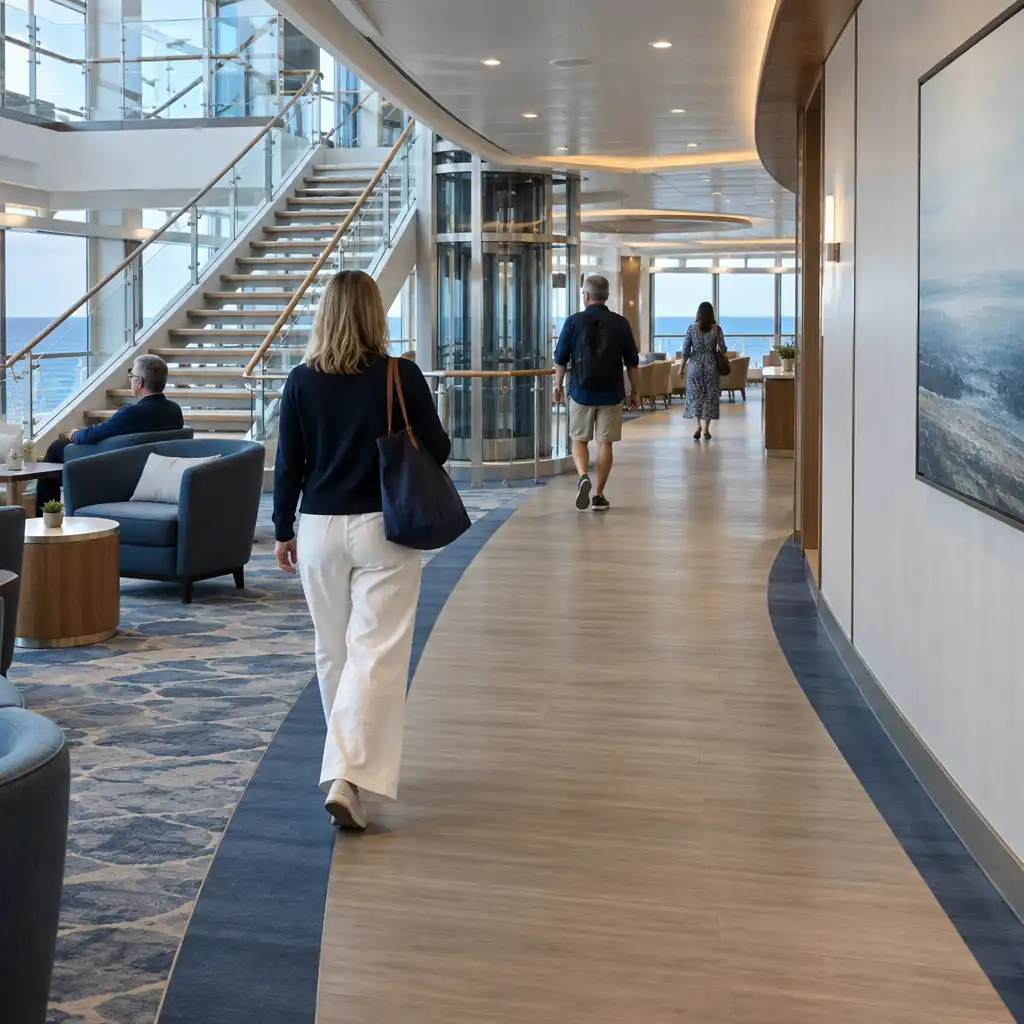
Bright cruise ship circulation area with seating and travellers moving through the space
Photography can support spatial orientation, but it records a moment rather than a guaranteed current setup.

Onboard imagery helps readers understand atmosphere and space when read with captions and current information. A photograph cannot guarantee staffing, access, venue setup, or service on your sailing. Browse the Gallery as part of wider visual research; Shipjou Rneyhub is not an official representative of a specific cruise line or casino operator.

Orientation tools

Deck plans as a practical map

A deck plan is most useful when it helps you picture the routes and choices that repeat throughout a voyage.

  1. 01

    Trace the routes you will use every day

    Start with the practical route between your cabin, dining, pool or outdoor areas, theatre or lounges, lifts, and embarkation-related spaces where shown. Walking distance and vertical movement often matter more than simply locating a cabin. Individual mobility needs and live onboard access arrangements still need current confirmation.

  2. 02

    Look for adjacency, not assumptions

    Nearby public venues, service areas, and outdoor zones may shape how a cabin or public space feels, but they are not automatic guarantees of noise or quiet. Pair a plan view with cabin guidance and current booking information. Read more in Staterooms & Cabins.

  3. 03

    Keep a fallback route for changing conditions

    Deck awareness can help with weather shifts, queues, indoor alternatives, and making the most of a sea day without relying on a single space. Access and schedules can change, so keep the focus on orientation and flexibility rather than fixed operational advice.

    Planning cue: note one indoor and one open-air option that suits your preferred pace.

New Zealand planning context

Pacific context changes the experience

Sun, wind, rain, sea conditions, and the balance of sea and port days can change how useful an outdoor deck, poolside space, or sheltered lounge feels. This is not a forecast or a promise about conditions; it is a reason to compare spaces in context. Check seasonal packing guidance, the current forecast, itinerary detail, and operator information close to departure so your expectations remain flexible.

Plan for flexibility, not perfect weather.
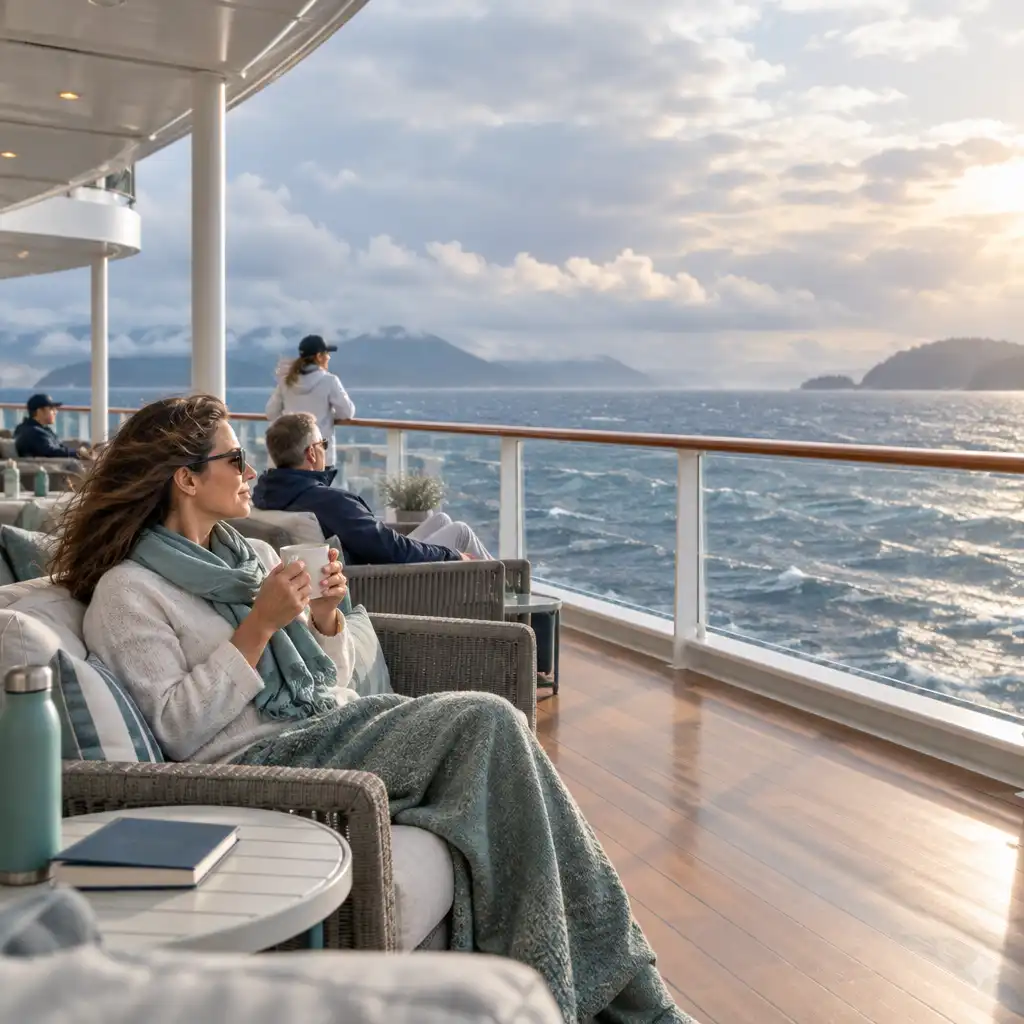
Passengers enjoying a sheltered outdoor cruise ship deck in changeable Pacific coastal light
Illustrative Pacific deck scene; conditions and access vary by sailing.

Port days change the onboard rhythm

Early starts, shore-day timing, and return-to-ship routines can affect dining choices, show times, lounge use, and your appetite for a busy or quiet ship. Specific schedules depend on each sailing, so use itinerary detail and operator updates as final confirmation. Treat this as a comparison lens, not a fixed rule.

Build a shortlist that works in more than perfect weather

Compare indoor alternatives, sheltered and open-air areas, cabin comfort, dining flexibility, and entertainment as a whole rather than judging from one promotional image. That approach works for couples, families, social travellers, and outdoor enthusiasts alike. Return to the comparison questions when you need to reset your priorities.

Go deeper

Choose the guide route that matches your priority

Move into the topic that will make the biggest difference to your planning, then return to ship profiles with sharper questions.

Staterooms & Cabins

Explore cabin categories, location considerations, and practical accommodation questions alongside deck-plan context. This is research support, not live inventory.

Explore cabin guidance

Dining & Lounges

Research food, drink, and onboard atmosphere with the reminder that venue arrangements and operating details should be confirmed for your sailing.

Explore dining guidance

Casinos & Gaming

Read independent, practical context for adult onboard gaming research without promises about outcomes or availability.

18+ — Casino gaming involves financial risk; play responsibly.

Explore gaming guidance

Gallery

Use onboard and ship-context imagery to understand spaces and atmosphere, always alongside captions and current sailing information.

Browse the Gallery

Field note

Build a useful ship shortlist

Keep your notes brief, practical, and tied to the voyage you actually want to take.

  1. Step 1

    Set your non-negotiables

    Identify the few factors that would genuinely affect comfort or enjoyment: cabin priorities, accessibility questions, preferred pace, indoor or outdoor balance, food routines, or evening atmosphere. Keep the list short rather than building an exhaustive wish list. Couples, families, nightlife fans, and outdoor travellers will each weigh these factors differently.

  2. Step 2

    Separate must-check facts from nice-to-have features

    Keep current-sailing details separate from broader lifestyle preferences. Must-check categories include itinerary, cabin allocation, access needs, dining arrangements, age conditions, and operational notices. Preference categories include atmosphere, spatial flow, outdoor time, and pace. This distinction helps you use editorial comparisons without mistaking them for universal operator policy.

    Must check: sailing details
    Nice to compare: overall feel
  3. Step 3

    Keep the final check with the operator or booking provider

    Use Shipjou Rneyhub to form better questions and compare the overall experience, then verify current itinerary, cabin, venue operations, access needs, and terms before committing. Cruise operations and onboard offerings can change by sailing, and this independent guide does not replace current provider information.

    Research clearly, then confirm current details.

Next step

Continue your research

A strong ship choice comes from matching your priorities with current, sailing-specific checks. Use Shipjou Rneyhub as an independent travel information and review resource to clarify what matters, then explore the relevant guide or resolve remaining practical questions in the FAQ. Return to the comparison framework whenever a detail starts to distract from the voyage you actually want.