
Plan your stay at sea

Staterooms & cabins, explained

Shipjou Rneyhub is an independent English-language New Zealand cruise ship guide and onboard lifestyle review site. This practical guide compares Interior cabins, Oceanview staterooms, Private Verandah/Balcony rooms and Family Suites so you can choose for the way you expect to spend time onboard and ashore, not simply the largest room your budget permits. It is designed for couples, families, first-time cruisers and travellers who value quiet, daylight or easy access.

Compare cabin types
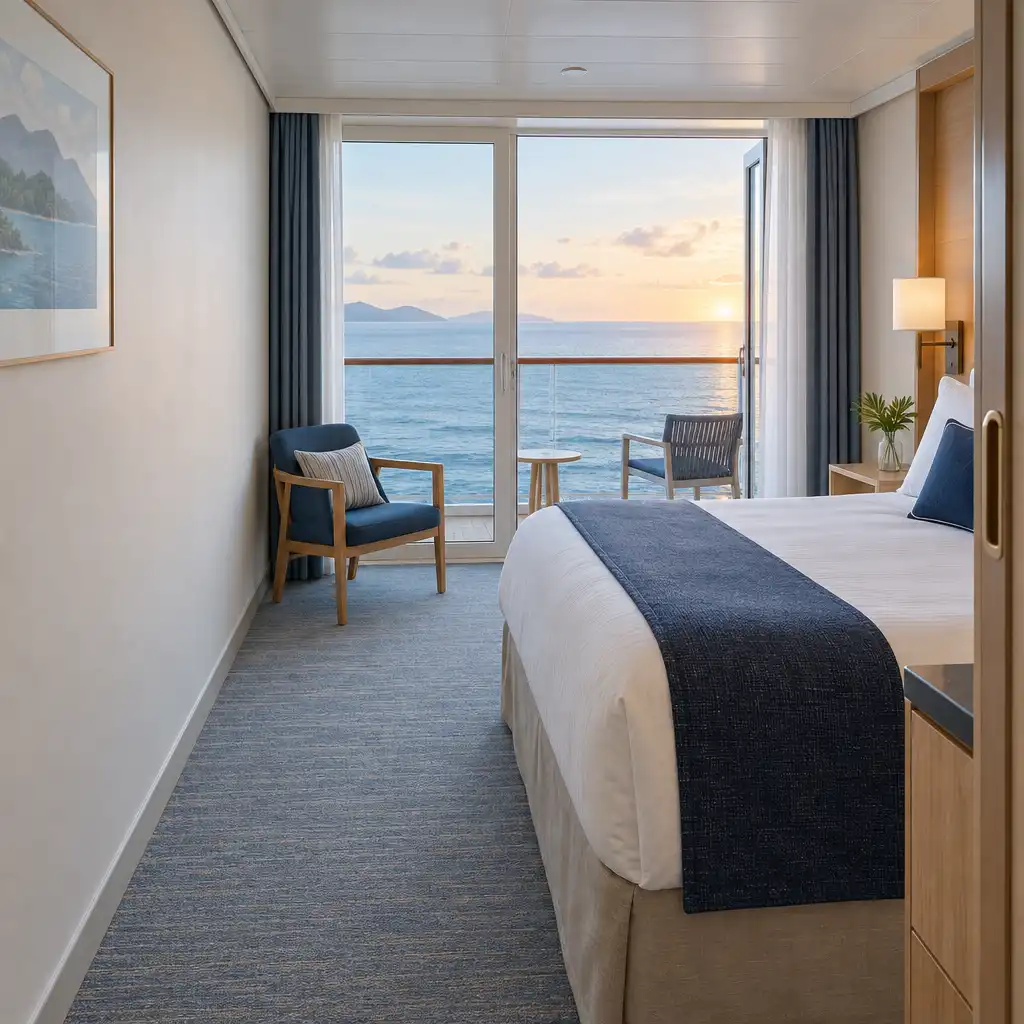
Contemporary cruise cabin opening onto a private balcony and calm Pacific horizon
Illustrative editorial imagery; cabin layouts and balcony arrangements vary by ship.

Start with the cabin trade-offs

Begin with the category that best matches your daily rhythm. The cards below are a practical first filter, not a ranking: each option gives something useful and asks you to accept a different compromise.

Interior cabins

Best for: active explorers, nightlife fans and budget-conscious travellers who use their room mainly for sleeping, showering and resetting between plans.

Main advantage: you are not paying for an exterior window or private outdoor space.

Consider if: less natural light and no direct outside view will feel comfortable during your voyage.
Read the Interior cabin guide

Oceanview staterooms

Best for: travellers who value daylight and a visual connection to the sea without needing a place to sit outside.

Main advantage: a window or porthole can make the room feel less enclosed.

Consider if: the likely step up from Interior pricing suits you, after checking the exact view and any obstruction wording.

Read the Oceanview guide

Private Verandah/Balcony rooms

Best for: couples, scenic-route travellers and guests who expect to spend unhurried time in their cabin during the day.

Main advantage: personal outdoor access for fresh air, horizon views and a break from public decks.

Consider if: weather, wind, privacy and the category difference fit how often you will really use it.

Read the balcony room guide

Family Suites

Best for: groups who need room to spread out and can verify the precise layout before choosing.

Main advantage: space can support shared routines when the sleeping positions, storage and occupancy work for your group.

Verify: bed arrangements, bathrooms where listed, partitions, maximum occupancy and the cabin’s deck-plan setting.

Read the Family Suite guide

Category names are useful starting points. The selected ship’s current description remains the source for exact room features.

Interior cabins: spend on the voyage, not the view

Interior cabins can be a thoughtful value choice when the ship is your base rather than your destination. They suit port-intensive itineraries and travellers expecting to spend their time in lounges, on open decks, in dining rooms, at entertainment venues or ashore. A lower category is not automatically lower quality; it can simply match a trip where the room is a reliable place to sleep, change and recharge. Late sleepers may also appreciate controlling their own wake-up routine rather than relying on daylight.

Good match if…

  • you would rather direct more of the holiday budget to the voyage itself and shore time;
  • you are comfortable spending sea days in shared onboard spaces; and
  • you are happy to set an alarm or use a wearable to keep your preferred morning rhythm.

Oceanview staterooms: daylight without a balcony

The Oceanview appeal

An Oceanview stateroom offers a simple connection to the changing sea, harbour or port environment from inside your room. For some travellers, that daylight makes a cabin feel less enclosed while avoiding the need to pay for personal outdoor space. It remains different from a balcony: you are looking out rather than stepping out. Think of it as a useful middle ground when natural light matters to your comfort, but sitting outdoors is not central to your day.

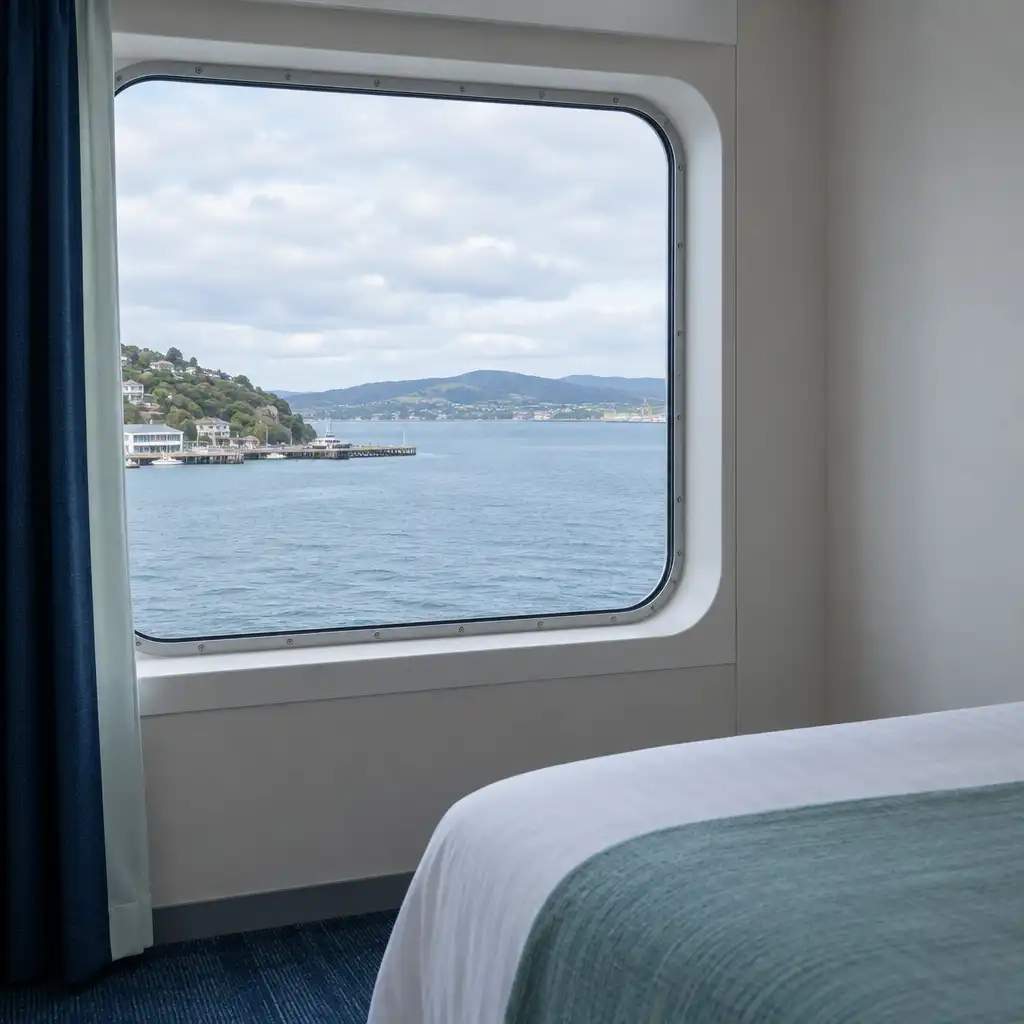
Cruise stateroom window looking across a bright New Zealand harbour
Illustrative editorial imagery; window type, placement and view vary between cabins.

Read the view description closely

“Oceanview” is a reason to inspect the booking description and deck plan, not an assurance of a particular panorama. Look for any wording about obstructed or limited views, then check where the room sits. A cabin near a public promenade or operational area may have context worth understanding. For the selected room, current ship documentation is the authority.

  1. Read the full category wording.
  2. Check the cabin number on the current deck plan where available.
  3. Confirm anything essential before committing.

Consider it when…

Who should consider the upgrade

Oceanview rooms can suit couples and solo travellers who want daylight but do not expect to sit outside. Families can weigh whether a window changes their everyday routine enough to matter. They may also appeal on scenic sailing days when a simple visual connection to the route feels useful.

Private Verandah/Balcony rooms: make outdoor space earn its place

What the private outdoor space changes

A private verandah or balcony gives you a quick route to air, a horizon view, quiet reading or a pause away from shared decks. It can be especially useful on scenic passages, slower sea days and voyages where you expect to recharge in your own space. That access is personal, but it is not a promise of complete privacy, uninterrupted weather or a particular view. The practical question is whether it will become part of your real daily rhythm.

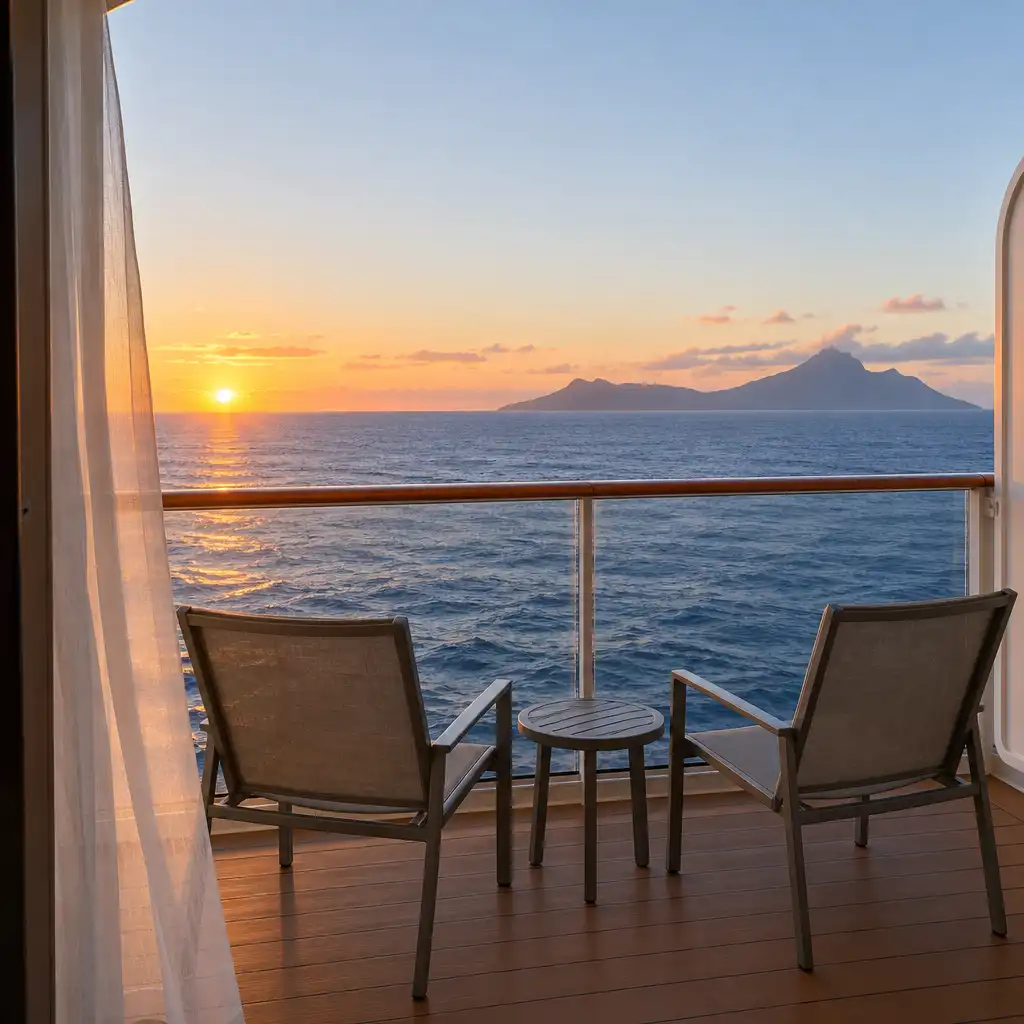
Simple chairs on a cruise cabin balcony at sunrise over the Pacific
Illustrative editorial imagery; balcony size, cover, furniture and outlook vary by ship and placement.

A good fit for your travel style

Couples: compare how much private daylight and horizon time you expect to use, rather than treating a balcony as a default.

Early risers and photographers: outdoor access may suit your routine, but exact views still need checking.

Quiet-reset travellers: it can offer a personal pause, while public decks remain a wide-view option for every cabin category.

It can also help to compare the category with what the same budget might support elsewhere in the voyage, such as shore time, dining or overall trip length.

Family Suites: plan the room around the group

Space is only useful when the layout works

A family-oriented suite may offer more room, but suitability comes from the actual layout and sleeping arrangement, not the suite label alone. Check listed bed types, sofa-bed arrangements, partitions, luggage storage, bathroom count where shown and the maximum occupancy. Young children, teenagers and multi-generational groups can need very different routines. Do not assume suite benefits or facilities: confirm what is attached to the chosen room and sailing.

Sleeping positionsConfirm who sleeps where and whether the arrangement suits the group.
Maximum occupancyCheck the stated limit for the exact room or allocation category.
Storage and routinesConsider luggage, naps, early starts and getting ready together.
Current descriptionReview the sailing-specific wording and terms before payment.

Where your cabin sits matters

Once you have a category in mind, use the cabin’s position to refine the shortlist. Location can affect your walking route, nearby activity and how the ship feels to you in changing conditions.

Open upper decks of a cruise ship viewed from above, showing its central deck layout
General visual guidance only; this is not an official deck plan or an exact ship specification.

Mid-ship for a steadier-feeling location

Many travellers concerned about motion look first at cabins nearer the middle of the ship and on lower decks where available. This is a common planning preference, not a medical solution or a guarantee of comfort. Individual sensitivity, sea conditions, ship movement and itinerary conditions all matter. If motion is a significant concern for you, prepare personally and seek appropriate professional advice about remedies.

Forward

Forward cabins may suit guests who value nearby venues, particular views or a preferred daily route. In rougher conditions, some travellers may notice more movement toward the end of the ship. Compare the location against the current plan rather than assuming it will feel the same on every sailing.

Aft

Aft cabins can be convenient for other routes and facilities, depending on the ship. They may also feel different to some travellers in changing conditions. Neither end is always quieter or better; your priorities and the deck-plan context should lead the decision.

Read the deck plan before you commit

A deck plan and booking page work best as a pair. Use this repeatable check before you settle on a cabin category or number.

  1. Start with the exact cabin or allocation policy

    Establish whether you are choosing a specific cabin number or a category that may be assigned later. Read the booking terms and category wording. A cabin number starts the deck-plan review; it is not the only factor.

  2. Check the surrounding decks, not only the room row

    Review what sits above, below, beside and opposite the proposed cabin area. Public spaces, activity areas, service zones, lifts and traffic routes can all shape the experience. Use the current plan for the selected ship and sailing where available.

  3. Read every qualifier in the room description

    Look closely at view status, occupancy, bed configuration, outdoor-space wording and category-specific notes. Terms differ between ships and cruise lines. If a feature is essential, save the description or confirm it directly with the relevant booking provider.

  4. Match the location to your actual day

    Use your priorities—quiet, motion comfort, family routine, venue access or sea-view time—to make a deliberate trade-off. Choose two non-negotiables and one flexible preference. A shorter walk can also place you closer to busy areas.

Choose by travel style, then shortlist

These profiles are starting points for a comparison, not promises about how a particular cabin will feel. Use them to decide which category and location to investigate first.

Start comparing: Interior cabins

Port-focused explorers and nightlife fans

If your plans centre on ports, dining rooms, shows, lounges or nightlife spaces, begin value-first with Interior cabins. Move to Oceanview if daylight is important to your comfort. On an activity-heavy trip, room time may be limited, so your comfort with an enclosed room and your sleep routine are useful deciding factors.

Start comparing: Oceanview and balcony rooms

Couples seeking a private reset

Compare Oceanview and Private Verandah/Balcony rooms according to the daylight, horizon time and outdoor space you expect to use. There is no need to assume one option is universally more romantic or better. Itinerary pace, sea days and the exact view or balcony wording are more useful guides.

Verify before booking

Families and multi-person groups

Start with Family Suites or other clearly described multi-person options, then check layout, occupancy and deck-plan context rather than relying on the category name. Sleeping arrangements and routines matter, as does the trade-off between nearby activities and possible noise. This approach works for varied group structures.

Start comparing: location first

Motion-conscious and quiet-seeking travellers

Investigate mid-ship, lower-deck options where available, then look for buffers from active public areas and read exact cabin details. This is a common strategy, not a promise against movement or noise. Build in personal preparation if you know you are motion-sensitive.

Conditions at sea and individual tolerance can change the experience.

Build a confident cabin shortlist

Keep the final choice practical. Cabin labels and layouts vary by ship, so use a shortlist to identify what needs checking for your exact sailing rather than searching for a universally best room.

  1. Choose a preferred category. Start with the amount of daylight, outdoor space or group room you genuinely expect to use.
  2. Name two location priorities. For example: quieter surroundings, a steadier-feeling location, family sleeping arrangements, or easy access to a part of the ship.
  3. Verify the exact room. Check the current deck plan, cabin description and surrounding deck context for the specific ship and sailing.

Return to the category grid with those priorities in mind, then compare the wording for your selected sailing.

Compare cabin types again